
Custom Tooling, Fixtures and Process Development
When a customer-defined metal part needs to move from drawing or sample to repeatable manufacturing, the part itself is only one piece of the challenge. The right custom tooling and fixtures can determine whether a prototype proves the design, a short run stays consistent, or a bridge production release stays on schedule.
Active Manufacturing supports engineers, OEMs, Tier 1 and Tier 2 suppliers, R&D teams, sourcing teams, program managers, and supplier-quality teams with practical tooling and fixtures for custom metal prototypes, short-run metal parts, and production-intent components. Our work is built around the same problem-solving approach used across prototype metal stamping and forming, CNC milling, EDM, laser cutting, welding, assembly, and inspection.
Ready to discuss a difficult part or repeatability issue? Send drawings, material, quantity, and timing through the custom metal parts quote form.
Tooling Built Around the Part
Tooling should match the part, the material, the risk, and the expected quantity. A one-time prototype may not need the same investment as a recurring low-volume release, but it still needs enough control to prove the design accurately.
Active helps evaluate the right tooling path for work such as:
Prototype tooling for engineering samples and validation parts
Custom stamping dies for formed, pierced, or production-intent metal components
Manufacturing fixtures for welding, assembly, machining, trimming, or repeat positioning
Inspection gauges used to check critical features on Active-manufactured parts
Process development for jobs that need a repeatable route before release
Manufacturing evaluation of an existing metal part or sample when enough information is available to reproduce the customer-defined part
The goal is not to overbuild every project. The goal is to build enough control into the process so the part can be made correctly, measured clearly, and repeated when the order returns.
Fixtures for Repeatable Manufacturing
Manufacturing fixtures help reduce variation when a part must be held, located, welded, formed, assembled, machined, or inspected. For complex prototype and short-run work, fixtures can be just as important as the primary machine process.
Fixtures may support:
Consistent part location during forming or welding
Repeatable assembly of small metal components
Controlled positioning for secondary operations
Better operator handling for delicate, thin, or intricate parts
Faster setup for recurring short-run releases
Inspection access for critical dimensions or features
Active coordinates the fixture with the full manufacturing route. A fixture that works for one operation but creates problems downstream is not enough. Our team looks at how the part moves through machining, forming, welding, assembly, and manufacturing quality inspection so the fixture supports the complete job.
Dies, Gauges and Process Development
Some parts require more than a simple holding fixture. Formed metal components, clips, brackets, flat-spring parts, and stamped features may require die work, gauging, or custom process development before the part is stable.
Custom stamping dies
Custom stamping dies can be developed for prototype and low-volume metal stamping where geometry, material behavior, and repeatability matter. This is useful when a customer needs a production-intent part but does not yet need high-volume production tooling.
Active is not positioned as a commodity high-volume stamping house. We are a fit when the part is difficult, the volume is selective, the timeline matters, and engineering needs a supplier that can help prove the manufacturing method.
Inspection gauges
Inspection gauges can help when a critical feature needs to be checked repeatedly during a prototype run, short-run release, or repeat order. Gauge strategy depends on the part, tolerance requirements, inspection plan, and customer documentation needs.
Active's inspection support is tied to the parts we manufacture. We do not position inspection as a standalone third-party inspection bureau, but we do use inspection equipment and gauge thinking to support controlled manufacturing outcomes.
Process development
Process development is often where difficult parts become manufacturable. Active may help evaluate operation sequence, material behavior, fixture strategy, tool access, manufacturability risks, and inspection needs before a job is released.
This is especially valuable for customers moving from prototype to bridge production and launch support, where tooling delays, validation timing, and recurring release needs can overlap.
Reverse Engineering From Samples
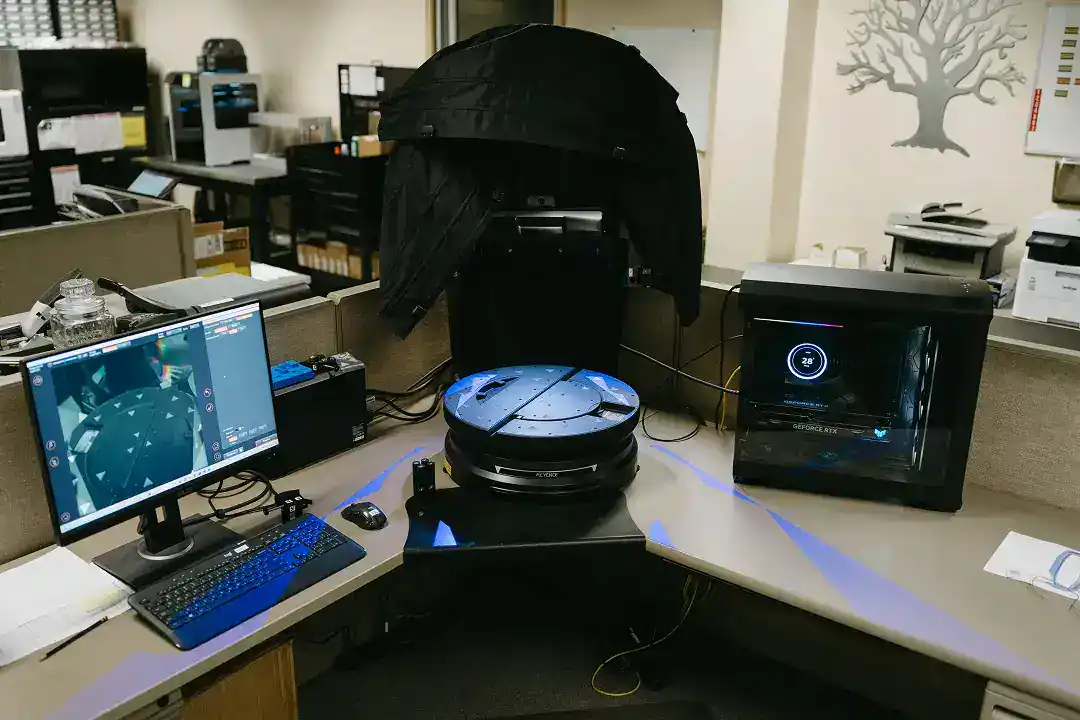
Some RFQs begin with an old part, a sample, or an incomplete drawing. Active can evaluate a physical metal sample to understand its manufacturing geometry and develop a route for reproducing a customer-defined part when enough information is available.
A physical sample can help identify geometry, formed features, assembly relationships, and possible manufacturing methods. When available, CAD data, drawings, material requirements, tolerance notes, and application context make the evaluation stronger.
Sample-based manufacturing review may include comparing the physical part with available files, identifying manufacturing features, evaluating possible production routes, and developing tooling or fixtures that support repeat production. Active provides manufacturability and process input; the customer remains responsible for the part design and its functional requirements.
If the part involves controlled information, export-controlled data, ITAR-sensitive details, or confidential customer files, do not upload those files through a standard public form. Request secure transfer coordination instead.
Built for Prototype and Short-Run Reality
Prototype tooling and short-run tooling require practical judgment. Engineers need parts fast, but they also need useful data. Purchasing teams need to understand why a ten-piece prototype run may carry tooling, setup, and process-development cost that does not resemble high-volume piece pricing.
Active can help choose a tooling path that fits the stage of the program:
For machined tooling details, fixture plates, complex features, and tight setups, Active can also coordinate with prototype CNC machining and milling capabilities under the same roof.
Frequently Asked Questions
What type of tooling is needed for a prototype or short run?
It depends on the part geometry, material, tolerance needs, quantity, timeline, and whether the job is a one-time prototype or likely to become a repeat release. Some parts need simple prototype tooling or manufacturing fixtures. Others need custom stamping dies, inspection gauges, or broader process development.
Who owns customer-specific tooling?
When tooling is charged separately to the customer, the customer owns that tooling. When tooling is not charged separately, it may remain Active-owned. The applicable ownership, storage, maintenance, and reuse terms are documented during quoting before work begins.
Can tooling be stored and maintained for repeat orders?
For recurring short-run or low-volume production, tooling storage and maintenance can be discussed as part of the quote and repeat-order plan. Storage responsibilities, maintenance scope, and ownership terms should be confirmed for each customer-specific tool or fixture.
Can Active reverse engineer a metal part from a physical sample?
Active can evaluate a physical sample to develop a manufacturing path for a customer-defined replacement part. A sample is most useful when paired with drawings, CAD data, material requirements, quantity, tolerance expectations, and application notes.
Still have questions?
If you have other questions that weren’t answered here, feel free to send us a message. We're happy to assist you and provide the information you need.
Start With the Part, Then Build the Process
The best tooling plan starts with a clear understanding of the part and the production goal. If you are working through a difficult prototype, repeatability problem, old part, tooling delay, or short-run release, Active can help evaluate the route.
Send your drawing, CAD file, material, quantity, and target timing through the Request a Quote page. If the project involves controlled or confidential files, note that you need secure transfer coordination before sending technical data.