
Precision Wire EDM and EDM Hole Drilling
Active Manufacturing provides wire EDM services for engineers, OEMs, and sourcing teams that need tight internal profiles, small holes, difficult conductive materials, or production-intent prototype features. Wire EDM can be a strong fit when conventional cutting, milling, punching, or laser cutting is not the best process for the geometry, material condition, or edge requirements.
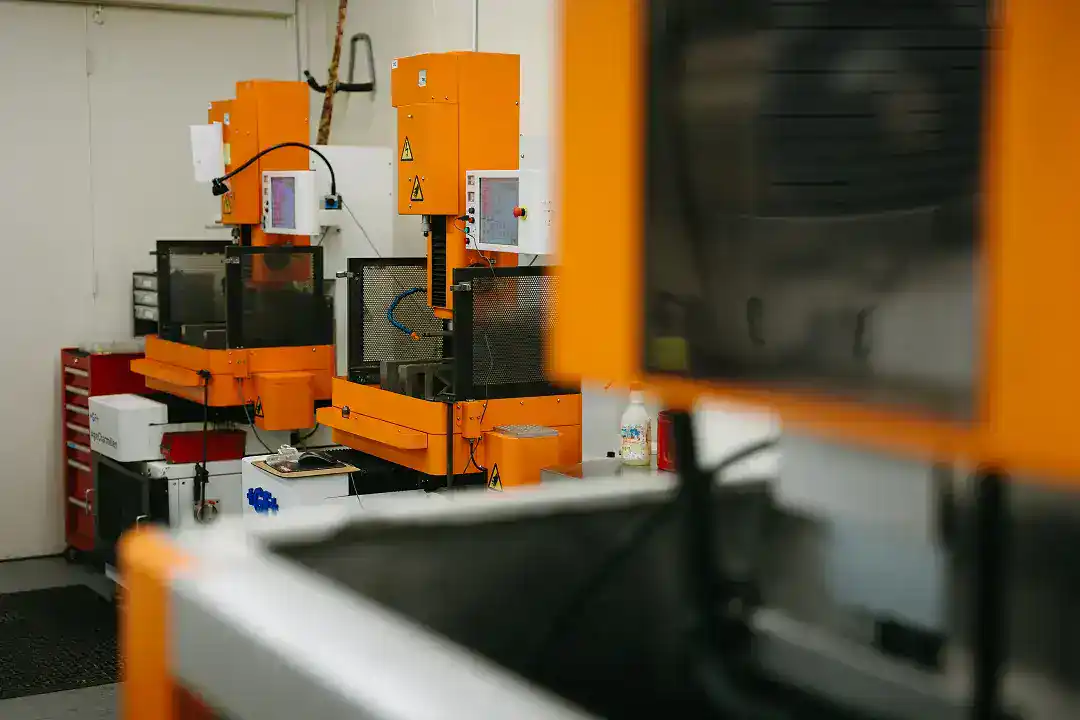
01
Wire EDM for Difficult Conductive Parts
Wire EDM uses electrical discharge machining to cut electrically conductive materials without relying on conventional cutting force. It is often useful for narrow slots, internal cutouts, hard metals, delicate features, and details that are difficult to reach with a rotating tool.
Active's wire EDM machining services may be used as the main cutting operation or as one step in a broader process plan. A project may combine EDM with CNC machining and milling, tooling work, forming, laser cutting, or dimensional inspection depending on the part.
Common EDM-fit needs include:
01
Tight internal profiles and slots
02
Fine details in conductive metals
Prototype wire EDM for development or validation parts
04
Tooling components, fixture details, and precision inserts
05
Hardened or difficult-to-machine conductive materials
06
Features where cutter access is limited
07
Small holes or starts prepared through EDM hole drilling
Because every EDM job depends on material, thickness, tolerance stack, geometry, and inspection needs, Active reviews the print or model before recommending the process.
02
When Wire EDM Is the Better Process
Internal Profiles and Tight Features
For internal cutouts, narrow profiles, precision slots, and sharp-featured geometry, tight tolerance EDM can be a better fit than forcing the work through milling or punching. It can help produce details that are difficult to reach with a cutter or impractical to form with a simple tool.
This is why EDM often supports prototype tooling, manufacturing fixtures, and production-intent prototypes. When the customer needs the geometry to represent how a part or tool should function, the process path matters as much as the final shape.
Hard Materials and Development Parts
Material hardness can make conventional cutting more difficult, but EDM removes material through controlled electrical discharge rather than tool pressure. That can make it useful for conductive materials that are hard, heat treated, or otherwise challenging to machine by standard methods.
Active uses EDM as part of a practical prototype-to-production mindset. If a part may later be stamped, formed, assembled, or produced in repeat releases, the EDM step may support validation parts, tooling details, or early builds while the larger manufacturing path is being developed.
Wire EDM is not the right answer for every metal part. It is most valuable when the design benefits from a non-contact cutting process, controlled geometry, and the ability to machine conductive material without the same mechanical tool pressure as conventional cutting.
03
EDM Hole Drilling for Starts and Precision Holes
EDM hole drilling supports small, accurate holes in conductive materials and can create starter holes for wire EDM cuts. This is useful when the wire needs to enter an internal feature rather than cut in from an outside edge.
EDM hole drilling supports small, accurate holes in conductive materials and can create starter holes for wire EDM cuts. This is useful when the wire needs to enter an internal feature rather than cut in from an outside edge.
For many projects, EDM hole drilling is part of the same planning conversation as wire EDM. The team reviews where the wire needs to start, how the feature will be held, and how the final part will be inspected. That planning helps reduce surprises when a prototype or short-run release has multiple critical details.
EDM hole drilling may support wire start holes, tooling details, fixture components, prototype parts, and features where drilling pressure, access, or geometry creates concern.
04
Fine Wire EDM and Material Considerations
Fine-Feature Planning
Small and delicate features are reviewed against wire size, setup, geometry, and the production intent of the part.
Conductive Material Fit
Material selection is also important. Wire EDM requires conductive material. Active works with a range of metals for prototype and short-run work, and material fit should be confirmed during RFQ review. For submission guidance, review materials and file formats before sending incomplete or controlled information.
Specialty Alloy Review
Beryllium copper wire EDM may be considered when the material grade, geometry, and handling requirements fit the job. Active's history includes beryllium copper component work, but beryllium-containing materials require careful review. Active does not machine pure beryllium. If your project includes beryllium copper or another specialty alloy, identify the exact grade and any safety, compliance, or handling requirements in the RFQ.
Fine wire EDM is often considered when part features are small, delicate, or difficult to access with conventional machining. Active's EDM capability includes fine wire options, but the right wire size, setup, and process plan must be reviewed against the specific drawing.
05
EDM Within a Multi-Process Shop
01
Wire EDM
Internal profiles and difficult conductive features
02
Laser Cutting
Efficient blank preparation
03
CNC Milling
Machined details and secondary operations
04
Tooling and Forming
Holding, fixtures, and production development
05
Inspection
Dimensional checks before shipment
The advantage of working with Active is not only access to precision EDM services. It is the ability to coordinate EDM with other manufacturing processes when a part requires more than one operation.
A difficult-part path may involve EDM for an internal feature, laser cutting for blanks, milling for machined details, tooling or fixtures for holding, and dimensional checks before shipment. Related capabilities include tooling, fixtures, and process development, inspection and quality control, laser cutting, micro laser cutting, and custom metal prototyping.
This is where Active’s shop-tour effect matters. Many customers come in for one capability and discover that the real value is the combination of skilled people, flexible equipment, and practical manufacturing judgment.
What to Include in an EDM RFQ
The best EDM quote starts with clear technical information. You do not need every answer finalized before contacting Active, but the more context you provide, the easier it is to identify the right process path.
INCLUDE THESE DETAILS WHEN AVAILABLE:
STEP, IGES, or PDF file
Helps review geometry, dimensions, and critical features
Material and condition
Confirms conductivity, hardness, thickness, and handling needs
Quantity
Separates prototype, short-run, and recurring-release planning
Critical tolerances
Shows where EDM accuracy and inspection focus are required
Need date
Supports scheduling and case-by-case expedite review
Secondary operations
Identifies machining, forming, finishing, or assembly needs
Controlled or sensitive files
Flags ITAR, CUI, export-controlled information, or other secure-transfer requirements
Do not upload controlled files through the standard public form. If your project involves ITAR, CUI, export-controlled information, or other sensitive files, note the secure-transfer need and Active will coordinate the appropriate access and NDA requirements.
Wire EDM FAQs
What materials can wire EDM cut?
Wire EDM can cut electrically conductive materials. Specific fit depends on material grade, thickness, hardness, geometry, and required tolerance. Provide the material callout with your RFQ so Active can confirm whether EDM is appropriate.
When is wire EDM better than CNC milling or laser cutting?
Wire EDM may be better when the part has tight internal profiles, fine slots, hardened conductive material, or geometry that is difficult to reach with a cutter. CNC milling or laser cutting may be better for other features, which is why Active reviews the full part before recommending a process.
Does material hardness affect wire EDM machining?
Material hardness often makes conventional cutting more difficult, but wire EDM removes conductive material through controlled electrical discharge rather than mechanical cutting pressure. Hardened or heat-treated conductive metals may therefore be good EDM candidates, subject to grade, geometry, tolerance, and handling review.
Can beryllium copper be cut with wire EDM?
Beryllium copper may be a fit when the grade, geometry, and handling requirements are appropriate. Identify the material clearly in the RFQ. Active does not machine pure beryllium, and every beryllium-containing application is reviewed before acceptance.
Need help with your EDM part?
Send the available drawing, CAD file, material, quantity, and critical-feature notes. Active can review whether wire EDM, EDM hole drilling, or a coordinated multi-process path is the right fit for your part.